
“I just kept going.”
Laurin McCracken is a living watercolor legend, and the Watercolor Honor Society will present him with its Lifetime Achievement award at Watercolor USA 2026. Laurin served as a WHS board member for twelve years and was president for four of them. He is currently an emeritus board member, and he continues to provide the WHS with his wisdom, guidance, and prestige. The recipient of countless honors over the course of two blockbuster careers, Laurin epitomizes the American dream. The artist graciously sat down for a wide-ranging conversation about his life.
This five-part interview originally appeared in the Watercolor Honor Society’s spring 2026 newsletter.

I’m With You, Red Ryder
In preparing for this interview, I read dozens of Laurin McCracken articles, but none of them delved into your backstory. Could you tell us about your childhood, family, and places you’ve lived?
[Note: Laurin is a born storyteller. I didn’t cut in with lots of questions during this part of the interview, but please know that I was nodding appreciatively throughout, frequently saying things like, “Wow,” and occasionally lifting my jaw off the floor. —K.E.]
I was born in Meridian, Mississippi, where my mother’s father and his brothers owned a chain of furniture stores. None of them had any education, but they were really good businessmen. Then they lost the stores during the Great Depression. So my grandfather became an accountant for the largest laundry in Meridian, and my grandmother ran the drapery and fabric department of a department store called Marks Rothenberg. I grew up very much in the lower-middle class in terms of education, but I also had an exposure to the upper-middle class.
My dad was a blue collar guy. His father died in a hunting accident when my dad was in the eighth grade and his brother was in the sixth grade. They had to drop out of school to support their mother. My dad was a voracious reader and nobody's dummy, and over the years, he became the parts manager for an automobile dealership. And every time somebody would offer him twenty-five cents more per hour, we'd move. So we moved at least every two years, and about every third move, we'd end up back in Meridian, Mississippi.
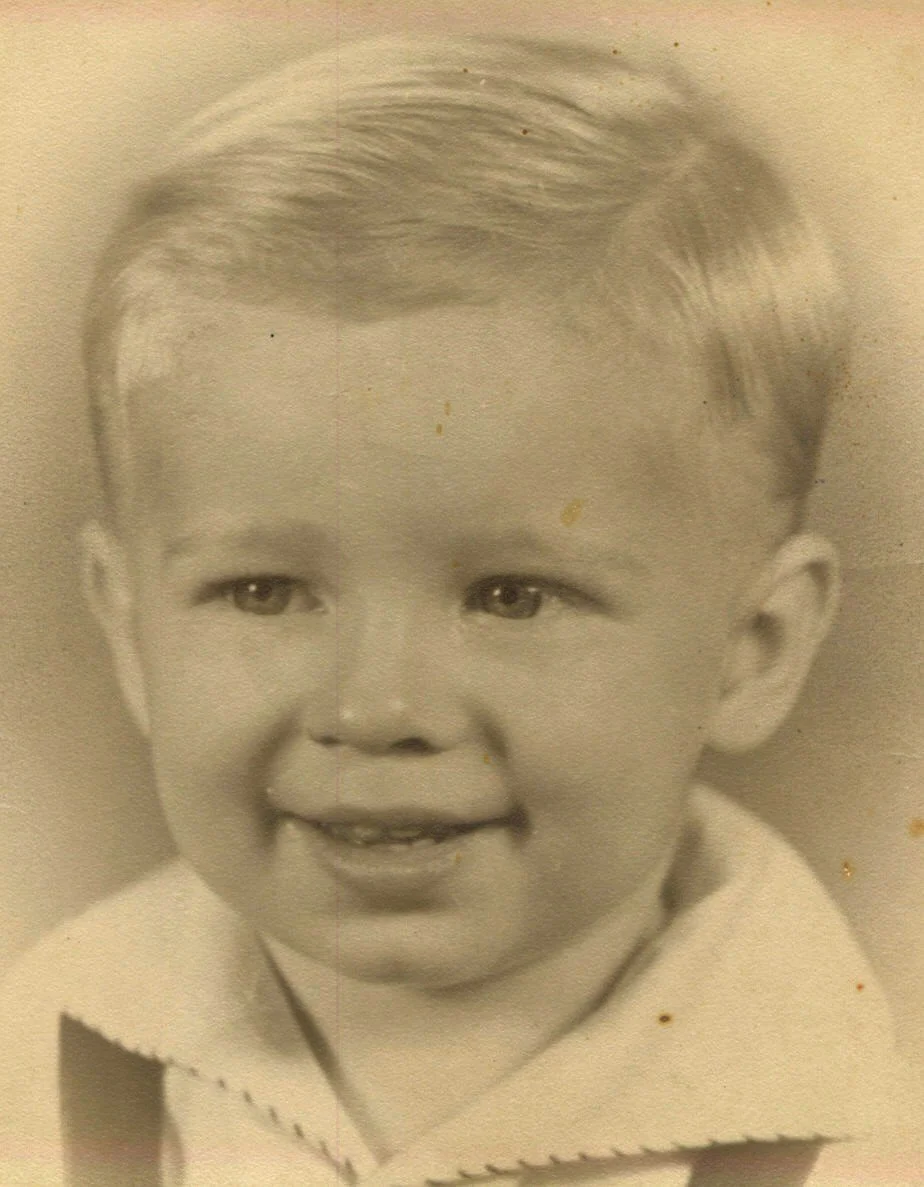
Laurin, age 4.
Can you talk about your childhood experiences with art, and have you always been able to draw realistically?
I've always drawn with a certain degree of realism, and I've always felt that my hand is not properly positioned if it doesn't have some instrument in it.
Somewhere in our family’s archives is a horse pulling a cart with a man sitting in the driver's seat, and the sky is just a blue line across the top of the drawing. And there's a little sun with rays coming out of it. That's something I made when I was maybe four years old, and I would love to have that, but I can’t find it. I do have some drawings from when I was ten and some oils that I did when I was twelve.
Did education become important to your family as you grew up?
I have a younger brother and a younger sister. Our family was committed to paying for four years of college for us. If we wanted to go on beyond that, we had to find a way to finance it. My dad had passed away by this time, and my mother was a high school English teacher. We existed on $4,000 a year. Somehow my mother and my grandparents scrimped enough money together, and I attended Auburn in Alabama where I studied architecture. Auburn was the only school I applied to. I didn't have a backup school. I just thought you applied to the school and you got in. How naive can you be?
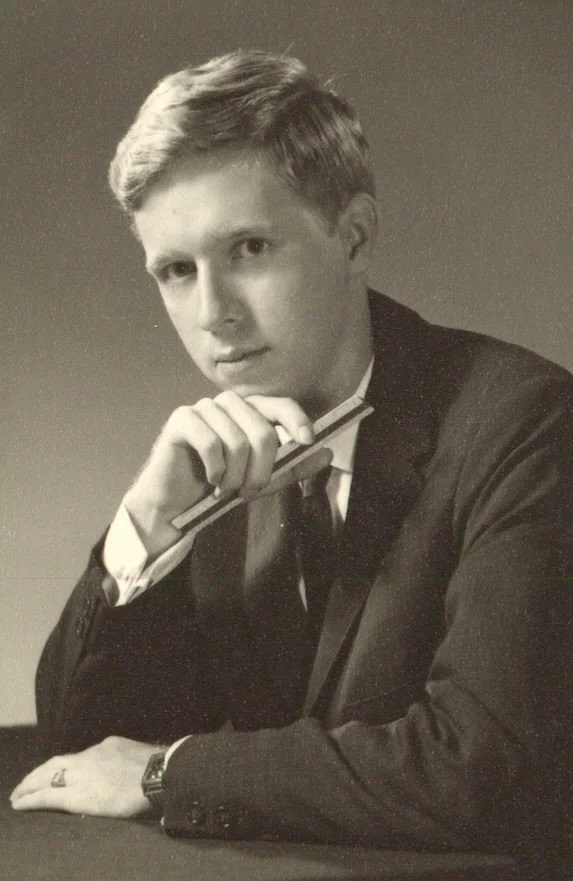
Third year architecture student.
I had four sterling years at Auburn: straight A’s, head of the ROTC military and architecture honoraries. I worked my butt off because I had no other qualifications, but I figured that if I worked harder than anybody else in my class, I could at least maintain, and I did better than that.
Tell me about the army.
I went into advanced ROTC because I could get fifty dollars a month, and that would pay for my art and architectural supplies. So I ended up in the army. Later I got into Rice University in Houston on a scholarship. Lucky, lucky guy. Once again, I didn’t want to embarrass either this institution or myself by not being at least a middle-level achiever, if not the top achiever. I was thrown into a class at Rice with designers who went on to lead big architectural firms throughout the United States, so I had to find my niche. After Rice, during the height of the Vietnam War, the army sent me to Germany for three years.
While I was there, I visited museums and saw a lot of Dutch still life paintings. I reveled in the clarity of the objects in those huge paintings, and how those artists told complex stories through their seemingly straightforward subjects.
After my time in Germany, I received a two year scholarship to Princeton, where I had the most incredible experiences you can imagine. By this time, I’d gotten married and had a three year old. I assumed that once I had finished my schooling, I would just go back to Meridian, Mississippi and work for [local architect] Mr. Clopton and eventually take over his three man office.
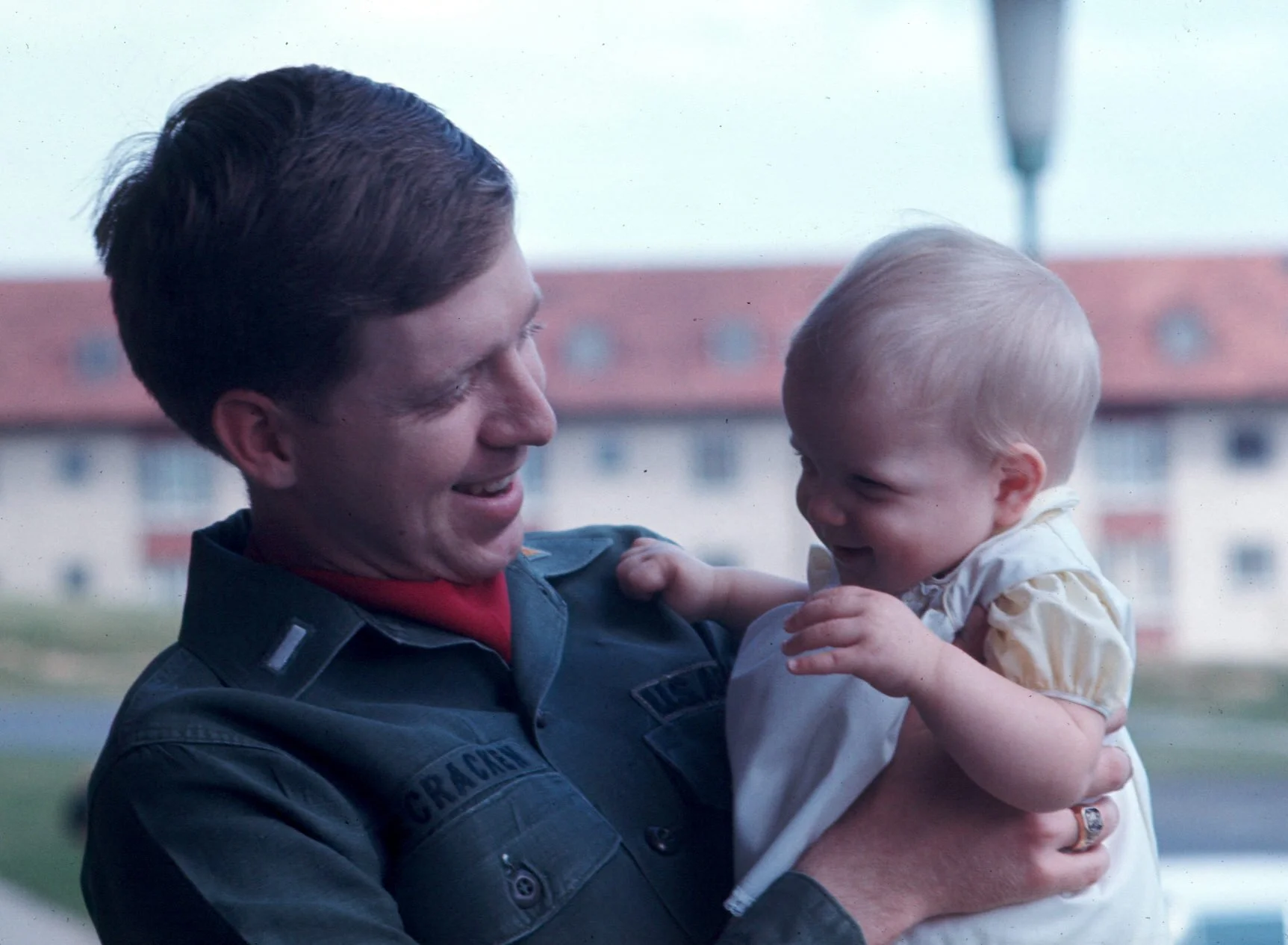
Laurin in Germany with daughter Leslie.
But my first job out of Princeton was in midtown Manhattan, where I joined the New York office of the largest firm in the United States at the time. I was part of a small team who designed Manhattan Community College, which is a million square feet. It's five blocks long.
Then I just kept going. A few jobs later, I became a partner in the continuation of the office of Mies van der Rohe.
Okay, wow!
There I was, just a poor boy polio victim from Mississippi, right in the middle of all this.
Wait. You had polio?
Yes. I was in sixth grade, and the miracle of it is that two days after I was infected, my family physician had come back from the first polio conference ever held in the United States. He examined me, and he looked at my mother and said, “I can’t believe this, but Laurin has polio.” So he picked up the phone and called across the state to Vicksburg, where the Sisters of Charity hospital was. That was the only place where they treated polio in the state of Mississippi. So the next morning, I was screaming in the back seat as my parents drove me to Vicksburg. The nuns immediately let me in, and four months later, I walked out.
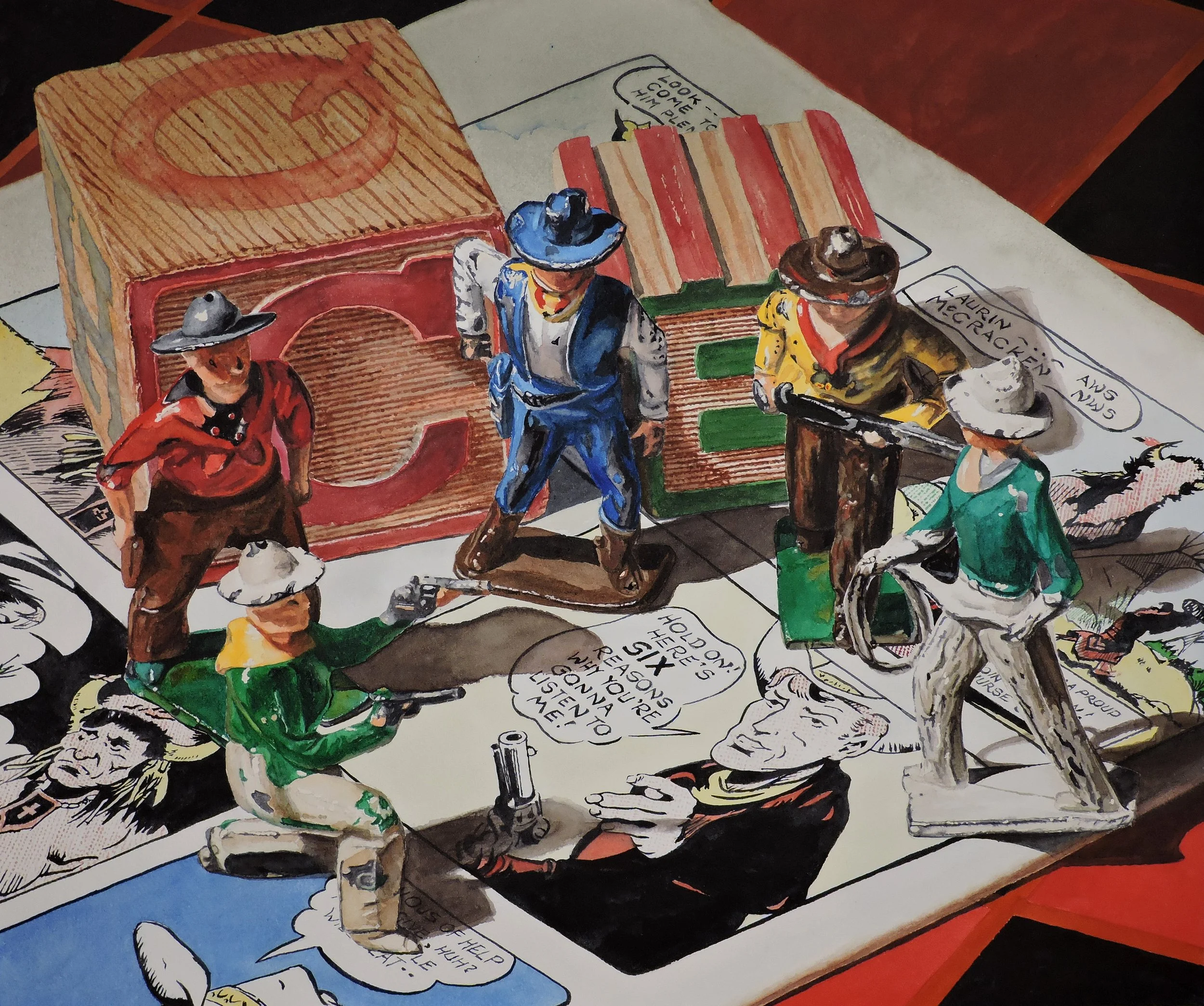
Six Reasons
Amazing. Oh my gosh.
When I was in quarantine, the nurses told my mother that any toys I brought in with me would eventually have to be destroyed because they didn't know how contagious or non-contagious polio was. We didn't have money for toys in the first place, much less those that had to be destroyed, but my mother, sweet and smart lady that she was, bought a ream of typing paper, two #2 pencils, and a sharpener for me. I was in a small room by myself with a big window on one side. When my mother came to visit, we communicated through the glass. If I looked through that glass window into the next room, which was a great big bay, I saw fifteen iron lungs with people in them.
My cousins and I used to have a rainy day game where we drew cowboys and Indians, so that's what I did when I was in quarantine. My cousins got together and wrote to all of our cowboy movie heroes saying, “Our cousin Laurin has polio. Would you send him a picture?” So by the time I got out of there, I had a whole wall of pictures from Roy Rogers and other stars. All of them were signed to me. And of course, all of them were burned when I left.
Oh no!
Too bad.
You went on to have a distinguished 40-year professional career as the head of marketing for architectural and engineering firms, and you traveled extensively for your work.
I accumulated 6 million miles on American Airlines.
This allowed you to see great art in the museums of the world, and eventually you took your first formal watercolor class at age 60. Could you describe some of the beginning projects Gwen Bragg had you work on at the Art League in Alexandria, Virginia?
I was working in Washington, DC, just down the street from the Torpedo Factory. Torpedoes were manufactured there during the first and second world wars. It sat idle for a number of years, and then it was converted to an art center. I would go there quite often, and I would see these fabulous watercolors.
I attended a six-week Sunday evening class. Gwen Bragg created little five-by-six paintings, and her mix of beginners and intermediates duplicated them. There's waves, there's sky, and it was all very well thought out. The first words out of her mouth were, “If you've never taken a class from me, then you're a beginner.” And I said, “Miss Bragg, I want you to take a look at my drawings. I think I'm competent enough to paint with your intermediate group.” And she said, “You've never taken a class from me, but how about this? You can do both groups’ projects.” Years later, I went with her and a group of ladies to Greece for a week to do plein air painting, and when she looked at what I was doing, she said, “Now the student is teaching the teacher.”

Present-day Laurin.