
“Some days it’s just so much fun to be me.”
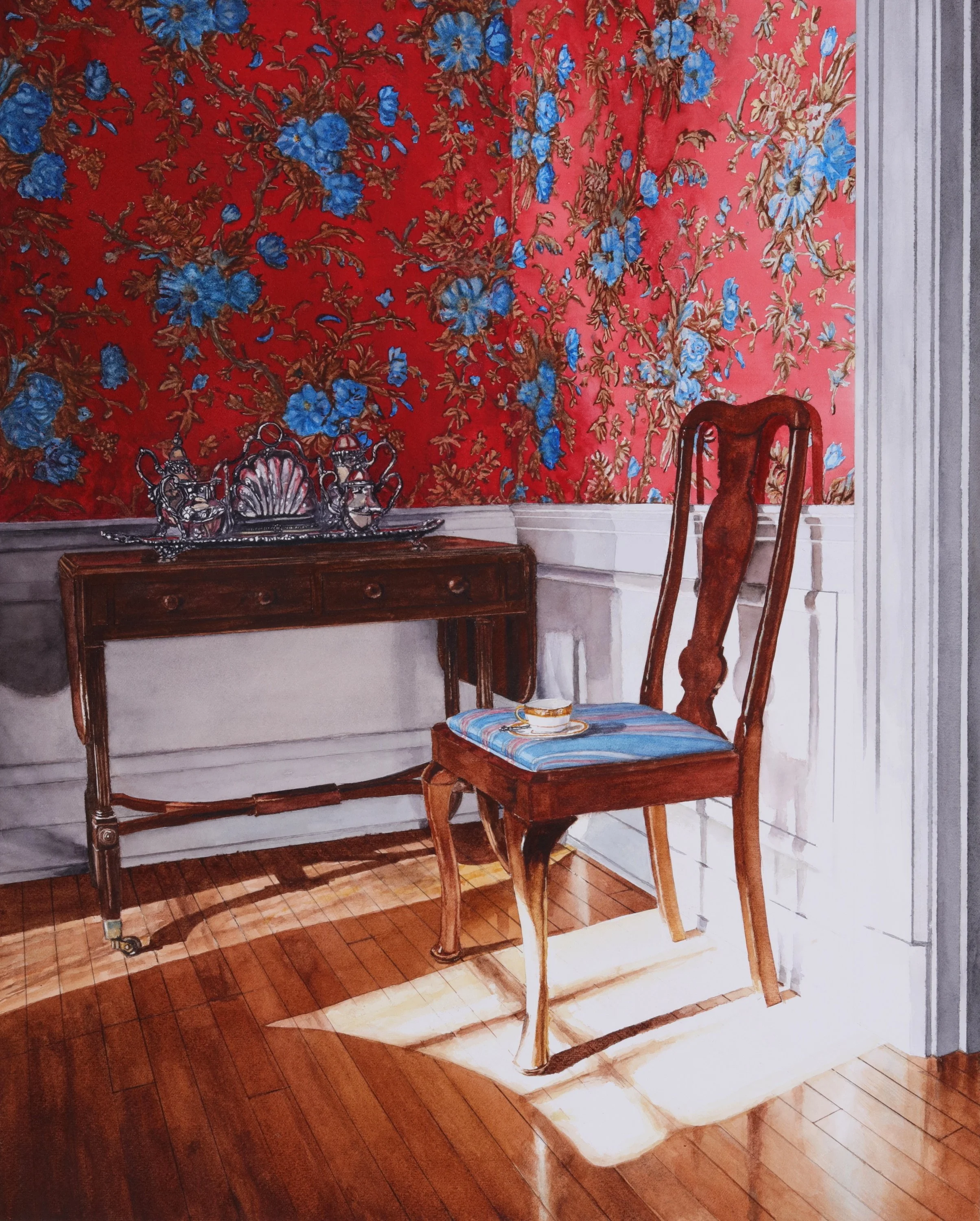
Chair
How has watercolor instruction and the community in general changed since you began painting? Would a 60 year-old Laurin have preferred to enter the world of watercolor in 2026?
Well, you know, that's hard to imagine, because everything happened for me at just the right time and in the right place.
One of the things that I love about the watercolor community is that the artists are just so bloody generous. You’d think a guy like John Salminen, who is sort of the patriarch of of watercolor—
He's a silverback.
Yeah, very good! He’s the silverback of all of us, although I'm a lot older. He's such a role model, and you might assume he’d be a crotchety guy. But he's just the sweetest big bear. If you see him at TWSA and say, “John, I really like that painting, but I have a question about the background. How did you handle that?” He'll say, “Well, I’ve got a minute here. Let me show you how to do that.” No other group of artists shares secrets like that. It’s really just watercolorists, and we do it universally. We do it in Pakistan, we do it in Italy, we do it in Belarus. We do it everywhere. And I think it's just magic, and that's one of the reasons why Fabriano in Acquarello has been so successful. You mix all of these people from so many different ethnicities and backgrounds and education levels, and it's a love fest. It's why you want to go to TWSA or Watercolor USA. Maybe you've got a picture in the show, or maybe you’ve won an award, but more than anything else, it’s about a group of compadres getting together and sharing ideas and just seeing each other's faces.
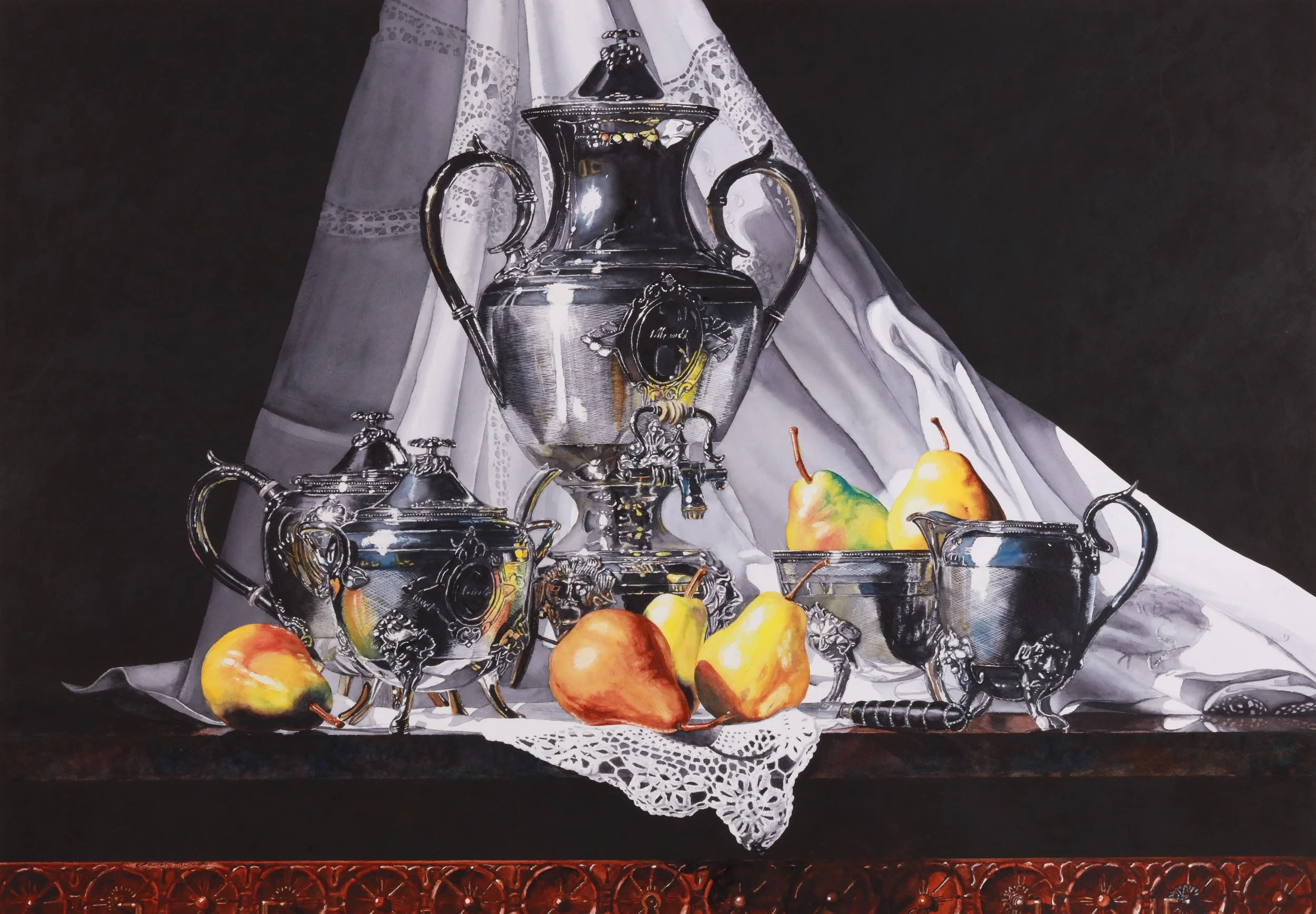
Still Life with Silver
Would you like to share your thoughts about the future of watercolor?
It's golden. It's absolutely golden.
The average woman who buys her first brush is in her late forties and early fifties. Her children are grown, and she’s got time and is looking for something to do. The average man purchases his first brush at 63. The last three to four years after Covid have seen the highest sales of watercolors and watercolor-related art materials in history.
So there are a lot of people who cry that watercolor is a lost art. Nobody's painting anymore. But the fact is, it's the other way around. More people are painting with watercolor now than ever before.
Your innovations were a giant step forward for watercolor realism, and your influence on watercolor still life painters is obvious and far-reaching. Are you flattered by your imitators? Or do you wish they’d find their own niche?
Yeah. I wish they would think before they paint. My best story is about someone I ran into who had taken one of my workshops. And she was eager to show me that she had copied a painting of mine, and my only thought was, you know, Why didn’t you take it to the next level? Why didn't you make a better Laurin McCracken and not just copy me? I didn't say that to her. I just said, “Oh, that's lovely,” and walked away.
How many paintings do you produce during a typical year?
Well, I only paint about ten paintings per year, and that’s only because some of them are quarter sheets. I've selected four shows I want to enter this year, so right this minute I'm working on four paintings for those shows. I'm always pleased just to get into a show, and if I win an award that's gravy on the mashed potatoes. I just need something to put in my CV every year.
So it's worth doing, and it keeps my name out there. If you're going to be a professional, you can't not do things like that. And this is what I stress to people in my classes and to my contemporaries: you're not going to win if you don't enter, right? And if you enter and don't get accepted, what can you learn from that?
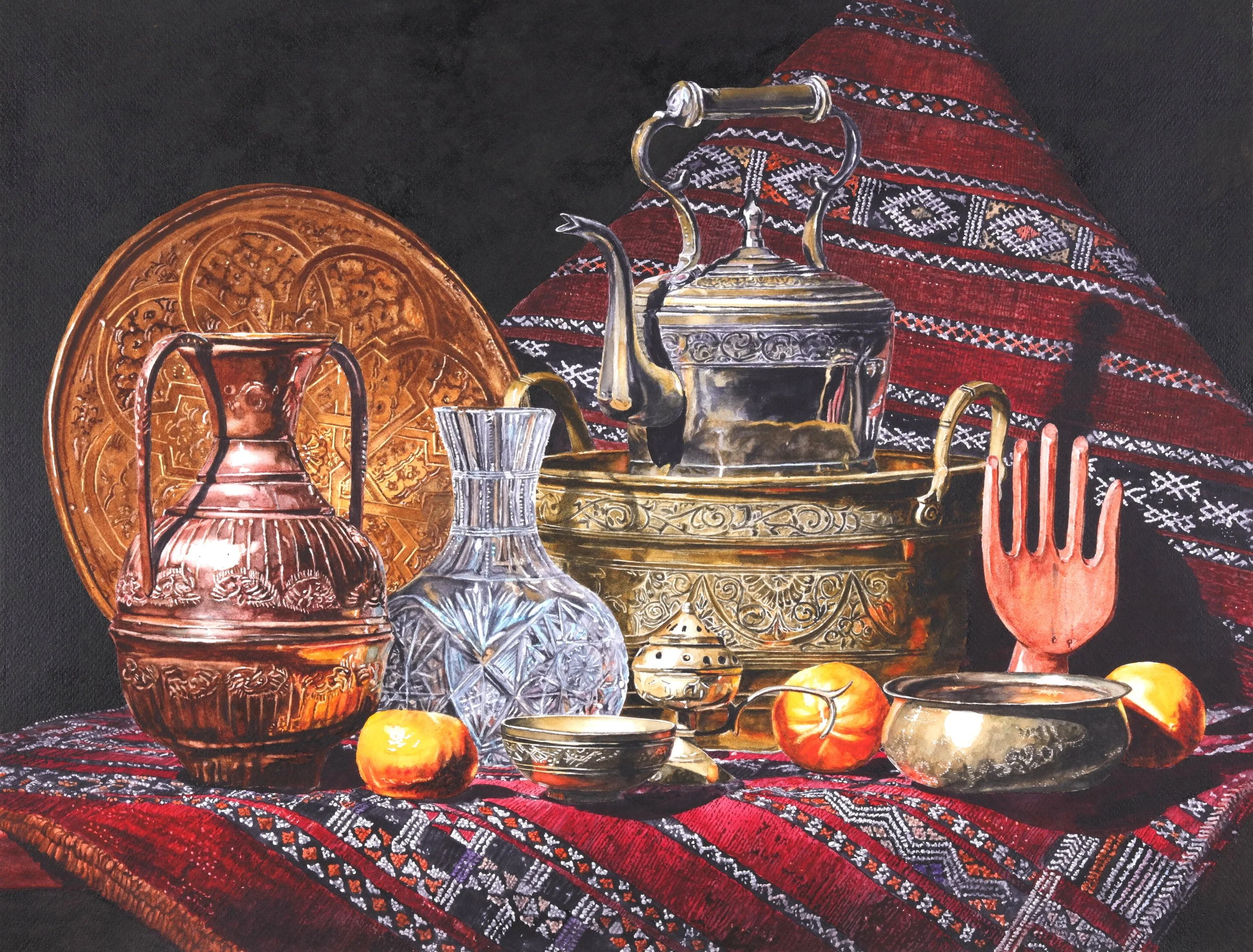
Moroccan Brass
Do you feel pressured to continue to top yourself?
Oh, to some degree, of course. It's part of being a professional, although every now and then I paint something just for the fun of it. I paint what I want to paint. And I think that's really important for every artist. If it's a burden, why are you doing it?
We had a Christmas party for the local watercolor society and had a white elephant gift exchange. I was sitting there with some people I know. This lady came and flopped down next to me, and she was a chatterbox, going on and on. She turned to me, and she asked, “Do you paint?” And I said, “Let me introduce myself. I'm Laurin McCracken.” And she paused and said, “Oh my god.”
Well, you're the Beatles, you know.
Don't say that.
No, you are!
Well, she jumped up, got her camera, and said, “I’ve got to have a selfie with you to show my husband!” That kind of overreacting? I don't like it, but I don't want to be in their faces about who I am. At the same time, I want them to know that I'm participating in what they're doing. And that's why I try to go to all the demos and all the meetings of my local watercolor society, just to be there to support them.
And well, some days it's just so much fun to be me.
That should be the headline for this interview. The Watercolor Honor Society will present you with its Lifetime Achievement award at Watercolor USA in late May. You’ve received so many accolades over the years—is this one special?
Oh yes. You know it's a two-sided coin, of course. If you call it a Lifetime Achievement, does that mean this is the end? Because that's the implication. I am so flattered to be recognized, and I'm very appreciative of my peers on the board that I have spent so much time with since I joined them something like twelve years ago.
It's going to be interesting to see what I say when I get to the event, because right now I’m scratching my head. I think I'll just talk about my paintings, but we'll see.
Thank you for all the work you did for the WHS in those years before I joined.
That's why we do these things, you know. I don't do it for myself. I do it for other people. Because over the course of my entire life, I've been very lucky to have mentors who were so gracious to me. I feel this absolute need to pass that on, whether it's art, architecture, sharpening pencils, or whatever it is. I need to share that knowledge.